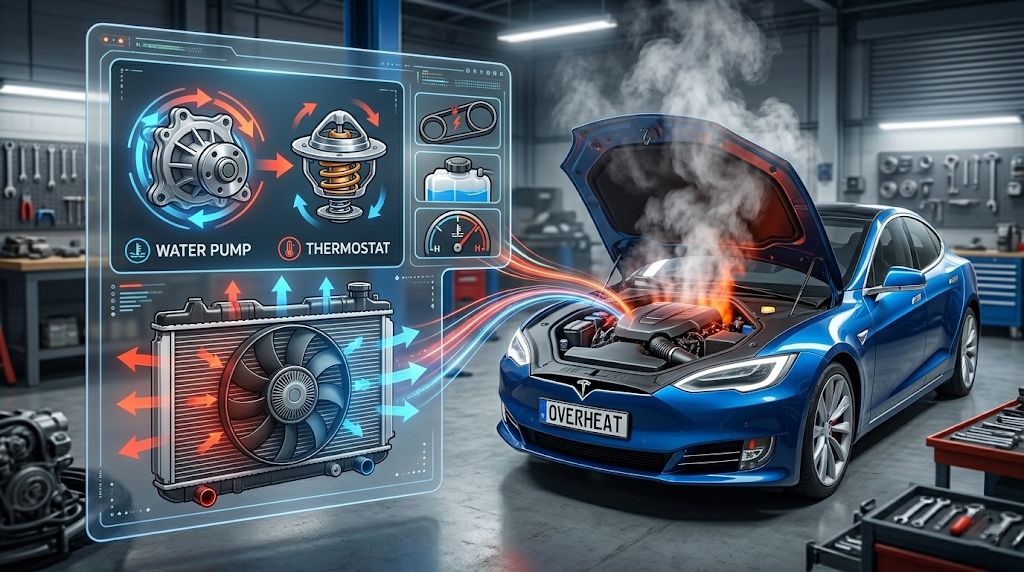
An overheating engine is one of the fastest ways to turn a small car problem into a major repair bill. Your engine is built to operate within a specific temperature range. When that balance is lost, heat begins to build faster than the cooling system can control it. What starts as a rising temperature gauge can quickly become a blown head gasket, warped cylinder head, or even complete engine failure.
The good news is that engine overheating usually gives you warning signs before serious damage happens. In many cases, the cause is a worn cooling component, a fluid issue, or a small part that has stopped doing its job.
Below is a clear pointer-based guide explaining the most common causes of engine overheating, what each issue means, and which parts usually solve the problem.
Coolant is the first line of defense against heat.
When coolant runs low, the engine loses its ability to regulate heat. This is one of the most common and easiest causes of overheating to fix.
Parts that fix it: Coolant refill, coolant reservoir, leak repair components.
Even a small leak can cause major temperature problems.
Coolant leaks often begin small, but they can quickly leave the car engine vulnerable to heat damage if ignored.
Parts that fix it: Radiator hoses, hose clamps, water pump seals, radiator repair parts.
The thermostat controls coolant flow.
A faulty thermostat is a small issue that can create major overheating problems in a short time.
Parts that fix it: Thermostat, thermostat housing, gasket.
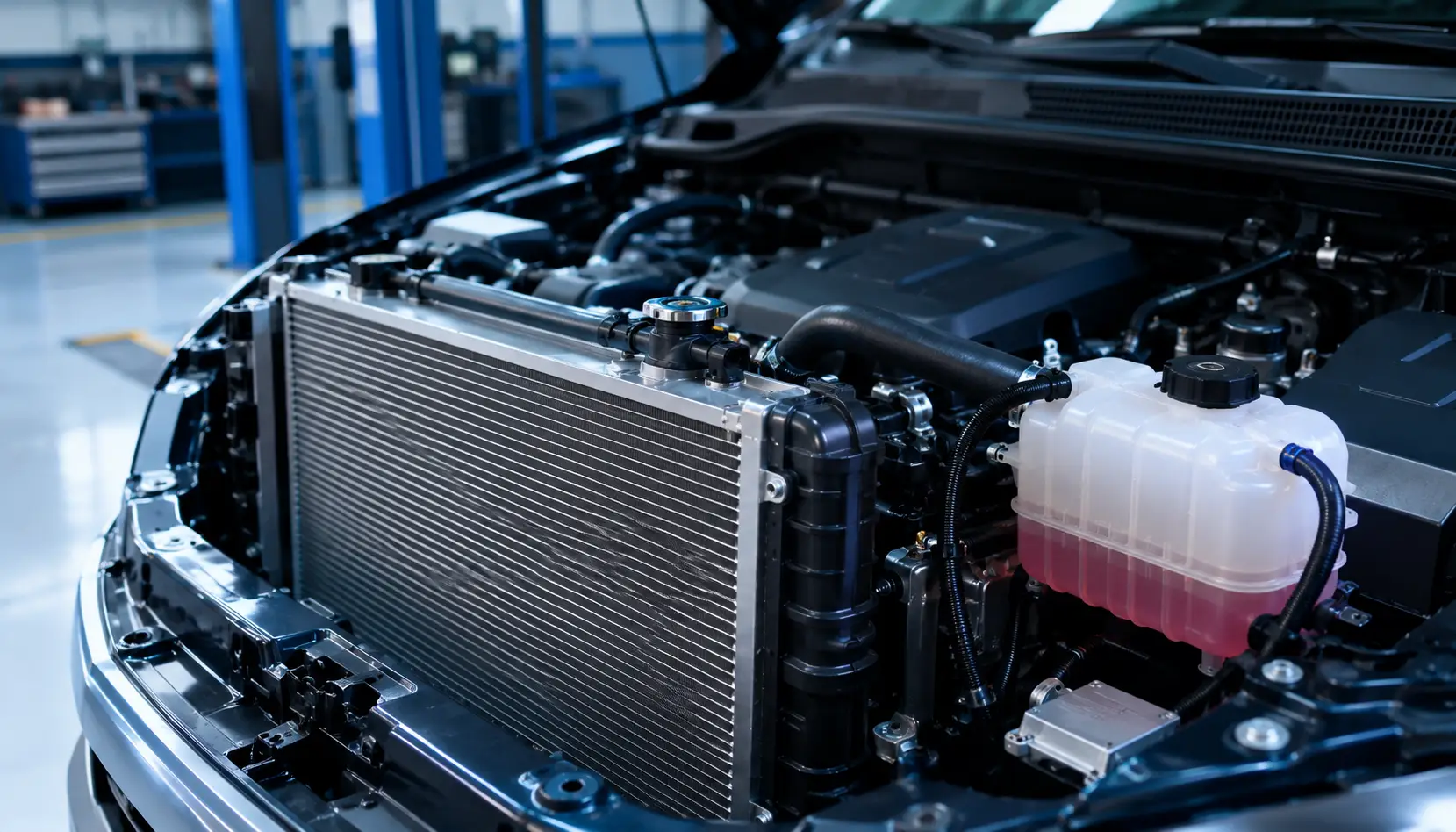
The radiator removes heat from coolant.
When the radiator cannot do its job, heat stays trapped in the system and engine temperatures rise fast.
Parts that fix it: Radiator, radiator cap, radiator flush solution.
The water pump keeps coolant moving.
Without steady coolant movement, even a full cooling system cannot keep the engine cool.
Parts that fix it: Water pump, water pump gasket, drive belt.
Coolant needs a clear path to circulate.
A blocked hose can act like a traffic jam inside the cooling system.
Parts that fix it: Upper radiator hose, lower radiator hose, hose clamps.
Airflow is essential for cooling.
This is especially common in traffic where airflow is already limited.
Parts that fix it: Cooling fan, fan motor, fan relay.
Electrical control matters too.
The fan itself may be fine, but the control system can still cause overheating.
Parts that fix it: Fan relay, temperature switch, cooling fan sensor.
Pressure affects boiling point.
A weak cap can cause overheating even when other parts are working normally.
Parts that fix it: Radiator cap.
Air pockets disrupt coolant flow.
This often happens after coolant replacement or repair work.
Parts that fix it: Coolant bleed service, coolant refill.
One of the most serious overheating causes.
This often causes repeated overheating and severe engine damage.
Parts that fix it: Head gasket, head bolts, machine work components.
Internal buildup restricts coolant flow.
This is more common in neglected cooling systems.
Parts that fix it: Cooling system flush, radiator cleaner, hose replacement.
Oil helps control engine heat too.
An engine with low oil runs hotter and wears faster.
Parts that fix it: Engine oil, oil filter, leak repair parts.
Some cooling parts rely on belt power.
A damaged belt can trigger overheating very quickly.
Parts that fix it: Serpentine belt, belt tensioner, pulley.
Airflow must reach the radiator surface.
Restricted airflow reduces cooling performance, especially in hot weather.
Parts that fix it: Radiator cleaning, condenser cleaning tools.
Sometimes the reading is wrong.
This may cause the engine to run too hot without proper warning.
Parts that fix it: Coolant temperature sensor, sensor connector.
Driving habits can increase heat too.
This often exposes cooling problems that were already developing.
Parts that fix it: Cooling system inspection, upgraded radiator, transmission cooler.
These signs usually appear before major engine damage occurs.
Most overheating problems start small and become expensive only when ignored.
Engine overheating is one of the most common causes of major engine damage, but it is also one of the most preventable. In most cases, the problem starts with a small failure - a leak, a weak thermostat, a clogged radiator, or low coolant - and grows worse over time.
Understanding what causes overheating and knowing which parts fix it gives you the advantage. Catch the problem early, replace the right parts, and you can avoid serious engine damage, expensive repairs, and roadside breakdowns.
A healthy cooling system does more than control temperature. It protects the entire engine.
Low coolant level is one of the most common and easiest-to-fix causes of engine overheating.
Yes, a stuck thermostat can block coolant flow and cause rapid overheating.
Yes, low oil increases friction and heat, which can raise engine temperature.
Common signs include overheating, poor coolant flow, and uneven radiator temperature.
No, driving while overheating can quickly cause severe engine damage.